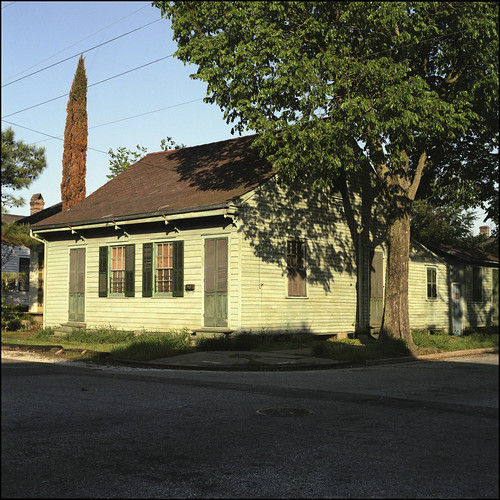
At last....
>> December 7, 2010
At 8:30am, it's 41 degrees in our screened porch, and I sit with hot water bottle on my lap, baby blue angora hat atop my head, and a steaming cup of jasmine tea close at hand. It's a good life, really it is.
This is just a tantalizer...
Look for our article coming soon: How to lower waste after your disaster.
We have been astounded by the number of lots across south Mississippi which are filled with decaying 'FEMA' mobile homes for sale. Remember how these travel trailers were rushed to the Gulf Coast only to sit in lots of up to 40,000 trailers unused for months after the disaster? Remember how the first 18month life from purchase by our government through maintenance contract meant that average unit costs of $120-180k more than doubled the cost of complete renovation estimates per New Orleans' native 'double' family home?
But, in the USA when we have a disaster our government does not allow that recovery produce permanent solutions such as restoring existing housing - only temporary patches allowed.
Years after these trailers were determined unsafe to live in (due in part to being constructed with high concentrations of formaldehyde) they are being offered as reused, cheap, housing. They now fill plastic lots with signs asking potential customers to 'make offer.'
How the US wasted resources and other opportunities to use the disaster of Katrina continues to astound us almost 6 years since our disaster. But, how are our lessons being applied? How have we used the opportunities for teaching, learning, and being more humane in the disasters which have occurred since the Gulf Coast and Katrina? How has Haiti, by example, benefited from histories of New Orleans and Gulf Coast (non)recovery and/or (lack of) human restoration? Has the US/FEMA, Red Cross, or NGO community changed significantly how it expenses limited resources since Katrina's gross misuse of funds and misrepresentation of aid or assistance?
We are investigating. We are going to visit the FEMA parks and share our images. Did you have a FEMA trailer? Can we share your story? When you share it can help defend others. Your story matters; What we do now in sharing the truth defends the next disaster community.
I.
This blog is titled "Traveling Abroad the Fence" which means you can travel anywhere!
[If you haven't read this blog for a while, you may begin to notice that certain themes appear and we deal with them for a while - say over a couple weeks or a month. Themes that are not always clear or straight forward themes; but, like some of us, are good for thinking about problems or opportunities; they develop in us over a long time.]
Being from Gulf Of Mexico/Mississippi River Bottom culture - we stew everything a long time.
This week, as the season got frosty for us (lows 49' F - 10' C) we started using our big Crock Pot as an ambient heater. The idea of greens in a pot is quintessential southern Autumnal food life; sweet potatoes, green and cabbages - all these point to changes of season on our food calendar.
We cooked Beans, eggplant dips, and sweet potatoes literally for days: Leaving a simmering pot of cinnamon potatoes cooking is so much nicer than just burning gas or electric!
Turn your crockpot into a RockPot of good tastes this winter and reduce your heat bill!
We decided long ago that when we got back to the USA after a ten month round-the world adventure we would adopt a mantra of traveling in your own backyard. The truth for us was that even as we have passed through and visited the furthest foreign lands; we did not want everyone to set their expectations that high. We do not expect everyone to have the possibility to travel as we have. We want to share our experiences and help others gain some lessons if they are interested. Food and lifestyle are very natural places to start. Living in Louisiana we can be engrossed in our native cooking styles. However, for the most part, our ideas of food all come from somewhere and were imports like all of us living here.
In addition to fine local sweet potatoes, we have been eating rice. We have not given up pasta, tortillas, or bread - though we are eating much less; but, the world eats lots of rice. We like rice. If you eat rice, you eat what most of the world eats (including south LA.) It is easy to make; and leftovers keep well. So, we bought the 25 lb. bag and are happy. We are also eating most of our meals (not po-boys) with chopsticks. For me, chopsticks slow down eating helping to savor food.
Here are some fun crockpot recipes to get your winter home-cooking season started.
[Save your rice. You can make delicious rich rice pudding with cardamon like we have done with cardamon we brought back from the Himalayas; or, even more authentic, make some Creole Calas - foods sold sweet on the street and one of the ways during New Orleans' 'code noir' law these famous calas helped many slaves who bought their freedom.]
II.
What is travel after all? Traveling is experiencing something new, in a way you have not known it, from a point of view you have not yet discovered it. By this definition, we can very easily travel by choosing to do things we have not done before; and, by being intentional to enjoy their newness and appreciate what we are learning in the process.
So, I have tried this concept on. I have visited some places that had been right in front of me. And,
I have scheduled or begun the planning to visit other new and obvious
And when I write about these markets as I already have, I get great feedback and new ideas like these great green market and collective farming ideas from my dear mother-in-law in Oregon.
Shopping is a very easy way to make a sustainable idea a reality. When we support local markets, we realize our connectedness to what we are buying. It degenericizes life!
This blog reminds me that the internet is such a fascinating way to visit places (virtually), to make long-distance 'pen pals,' and to learn about foreign places. We have many friends who would love to connect with you. If one of the countries we have visited or written about particularly speaks to you, please write us - we can put you in touch with one of our friends who would likely love to learn about you.
My husband has inspired me, as he oftentimes does. Today, he has inspired me with his blogging, and I am encouraged follow his example. The end of our constant motion does not mean that the journey has also ended.
But I miss covering ground. I miss walking long miles and tumbling into bed, feet and legs aching from hard use. These days I seem to be turning in small, tight circles, and it makes me feel a bit dizzy. My feet have nothing to say, it's my hands now that shriek and moan.
It has been so simple to slip back into the routines and seemingly-mundane activities of life in New Orleans. And yet, we are changed. Small, but substantial, alterations in our behaviors and patterns and conversations are constant reminders of new perspectives and experiences.
Memories from Honey Service Year bubble up with regularity, helping us to remember the significant and importance of fleeting, chance encounters with people and places that can unexpectedly change your life.
We are never without hummus; I make it from scratch, with dried chickpeas purchased at Mona's store.
We eat vegetables. A lot. And we are patronizing local markets and community gardens. I am also growing greens (root remnants of those purchased on a trip to the 5AM Vietnamese Market in New Orleans East, just as the sun began to rise over the soggy morning mist) and basil (from seeds collected in Cincinnati) and Kentucky oregano (a small transplant is courageously growing from an old tin can).
We have created a communal house in New Orleans, based upon concepts of respect and contentiousness and friendship. With more members of the household, we collectively use fewer resources and maximize the potential of shared space.
The emphasis that we placed on lowered consumption and materialism while on our journey has become part of our lifestyle; we recycle water, bicycle more often than not, and bring our own grocery bags everywhere we go. We try to buy only what we need, and resist (I have to work especially hard at this) urges of impulse and instant gratification spending. We try to live with intention, rather than being pushed and pulled and suckered into consumerist behaviors.
Chopsticks are used almost as frequently as forks, and we eat lettuce in our soup.
We have begun to serve as couchsurfing hosts; with each guest that stays with us, I recall the generosity and kindness of those who hosted us during our journey. Faith in humanity and trust in the human spirit is a feeling that can slip away if it is not nourished and encouraged; media and news sources are diligent in combating these positive feelings.
And yet, it all feels so distant. The memories slip further and further away, buried beneath tubes of caulk and glazier points and big rectangles of sheetrock and the last dregs of enamel paint in the can. We speak, as we learned to do on our journey, of the present, of the now, of right here. We dream of the future and craft our plans
With the fullness of the present and the future, there seems to be little time reserved for the past. And yet, it has a sweet and gentle way of slipping tendrils of poignant remembrance, patient contributions, and astute relevance into the evolution of our lives.
Onward we go, as the small, tight circles grow slowly larger.
We are part of a lot of projects in New Orleans. And we are huge supporters of many more.
This city still has something big to give the world.
We love couchsurfing.org and we are supporters of all sorts of arts and social activities. We want to do more than be fb updaters - we love to encounter people in person - real facetime is important.
We are idea people. We have business and arts and philanthropy ideas. Sometimes when we talk we need to just write down half and start two as businesses. The rest would be history.
Maybe that is what we will do.
In the meantime, we are counting buckets. Backets of water, backets of rain, backets of rooftar, backets of mr clean, and buckets of money (little small ones) with holes in 'em.
Today we laughed. 'It will be at least another five years,' I told Brittany's Aunt after dinner, 'before we go on another one-year round the world adventure.' we all giggled. 'Maybe.' B says.
Ok, we are about to get back to this thing.
We have been missing the blog. We talk about it. But somehow we are TOO BUSY and too whupped to ever have the energy at the end of the night to ever have what it takes to give back.
So this is about to change. One Goal to make this change is new: "10,000 blog views by December 14" or maybe New Year's. As our Year of the Honey Service Year comes to a close we want to remember, recant, reenlist, and reinvigorate the goals, activities, partners, and people we came to know, love, work with, or call friends.We are back in the USA. Very busy - working; yet, determined to stay true to principles from our trip and principles grown up in this blog.
What better way to do that than these short 'shout out' blogs.
So here goes. We are in New Orleans heading back to Colombia New Year's Eve. A lot has happened. This week was VOODOO EXPERIENCE in our neighborhood. Nathan's childhood music mentor Mr Payton passed away, it finally rained.
Spread the love. Help us make "10,000 blog views by December 14 or year's end" a reality.
Share our blog with those you know, love, are firends with who can benefit from its story.
Soemtimes it is an odd struggle finding home again...
We understand space ship reentry. We feel we just went through that this week as we are home just half a week after the Round the World Trip.
Honey Service Year year-end count down 50 days left.
We are home. How will our Honey Service end in the USA?
2.
New Orleans
Poplarville is calling....
3.
If anyone thinks we are slacking here or that we could have been more directed abroad this year, you would be right. But, there is a different impetus at home. Things soar. You know where things are and where they should be.
Our car (truck) was that sort of a story.
But... we are home. Indeed, it feels good to be home. We are carrying forward so many lessons learned meeting new cultures and absorbing good ideas; while, at home, applying ourselves very much at the here and now of what we do that impacts our world.
Murals, spray can art (and illegal graffiti), signage, and public art all play such important roles in defining cities, towns, and urban cultures. Public art viewed from the point of view of the traveler can become windows into the cultural world around us. Art in all its forms enlivens places we visit. For protest, aesthetic, and celebration, they are windows into a new world. Intentional art given for public purpose seems to do most good.
Public art provides a structural usefulness for people who live in the places we visit. It creates a ‘sense of place.’ Murals break up the monotony of hard flat surfaces. They tell stories and pass history between generations. Mosaics are like painting and plastic arts mixed. They seem particularly appropriate and historically resonant in the Middle East and Mediterranean
In Egypt, public art is often filled with ancient symbolism. It is a way to reach back into dim history while bringing forward contemporary aesthetic values. In Alexandria and Cairo, public art is everywhere. Aesthetics are not only on walls and in statues and sculpture put up in prominent locations, but on the painted market carts that rumble gently through the street delivering goods and selling merchandise.
Here in Cyprus, public art and architecture has been a part of public life for literally thousands of years. Villages are built on ruins of older villages containing theaters, frescoes, and mosaics several thousand years ago. But, today, art is increasingly important to meld modern sentiments, expressions, and politics with stories and history of by-gone eras. One particularly smart combination of public art in modern city expression we saw recently in Cyprus was the use of spray can collaborative muraling to surround ancient historic sites under reconstruction Spray Can Artists (graffiti artists who have gotten permission for the placement of their art) compete on tin panels securing restoration sork in the historic center. The contrast of the ancient and the contemporary provide a nice springboard for visitors and locals alike to see themes emerging without vandalism or public conflicts. However, the madcap artistry and tensions expressed by these youthful artists has a temporary functional utility which is sunsetting as the project of restoration moves to completion. Temporary Spray Can Art Installation outside Historic Site - Cyprus
Unlike murals, spray can art, public sculpture or mosaics (where agreements are fixed in advance with private or public property owners for permission to display art)): Graffiti is thought of as having positive and negative effects. But, by definition, graffiti is a nuisance. While it may be beautiful, it creates unbalance as someone has been hurt financially or otherwise. We have seen Roman historic sites 2000 years old spray painted with the usual swear words or propositions of love common n juvenile art. These ugly and selfish displays, which exist everywhere thoughtlessly and without any merit, take away from the artistry of others. Some solutions which we have seen are to provide temporary graffiti boards, to create competitions of juried spray-can art exhibitions, and for owners to turn ver more private and public spaces for display of public arts.
Life without music would be meaningless.” - Niezsche
[Taken from a marquee billboard advertising the Ghana Music Awards 2010
One night, as we were wandering through our Asylum Down neighborhood in Accra, we heard some great reggae bumping from a small shop with a corrugated metal roof. Being who we are, and feeling the ongoing inspiration of our portable hard-drive of collected music, we popped in to say hello. To our great delight, we found ourselves in the doorway of the local DJ studio, with DJ Black Shanti hard at work transferring music from records into digital form.
Shanti is promoting some great reggae artists from Ghana and has some ideas about creating an internet radio station. His office and DJ studio is one block from the circle of Asylum Square in Accra. If you are there and want to meet Black Shanti and some of his artists - just ask for the Rasta DJ, everyone knows him.
Thanks to Shanti, we have now have some fantastic reggae from West Africa…coming soon to a city near you! We really look forward to adding it to the 600GB collection at Hotel Oso Perezoso, and carrying it with us to share and enjoy on the rest of our travels.
We had similar good fortune in meeting another local musician in West Africa, again just by happenstance. One hot, sweaty afternoon in Lomé, as we were enjoying a cold Ekko beer at a local bar, a gentleman came up to invite us to his nightclub that evening to listen to some live Togolaise jazz! We started to speak about our jazz culture of New Orleans, but the conversation peetered out: our French was more limited than his English and we seemed to be getting nowhere. But our new friend popped into the doorway next door and emerged with his friend Yawo, who spoke both English and Spanish!. Almost immediately, our ‘translator’ became a great friend. We waxed on and on about music and the United States and cities around the world (Yawo Attivor and his Afro-Fun Band have toured and played with musicians in Africa, North America, Europe, Asia, and the Middle East). We talked politics and economics and global friendship. Yawo turned us on to some great music from Togo, and even shared some of his own tracks with us. We love it! You can get a bit of your own Yawo on youtube.com .
Another music exchange happened in Lomé, where we shared part of our collection to a budding young guitar player who managed the internet café one block from our hotel (La Patience) in Lome’.
And for the music lovers of this blog that need a bit of a soundtrack, here are a few of our other favorites (some of which you can listen to online for FREE!).
Listen to WRIU Rhode Island of Friday night, or Shepherd Mondays on 91.5 WTUL New Orleans. All of these great reggae stars of radio are ‘live’ on your internet dial streaming worldwide.
Pandora
Steve Greer’s awesome blues show on WRVU, Nashville
New Orleans' own WWOZ.
Listen to Black Shanti on radio 98.9 “Happy-FM” Ghana. Or hear it streaming on this site.
Check out our new friend Yawo on his site.
Get your groove on! And keep emailing your songs to us!
For the last two days we have been rocked with the tragic news from
Haiti. Of course, we want to be home tending to the hurt and loss in
our dear Caribbean. The people of Haiti have suffered so much; they
are the last ones who need to experience more disaster.
Images here are horrible. Our prayers and work will shift to digging
out more information from Sichuan Earthquake in China to try and give
some comfort and aid to our Haitian compatriots and those who work
feverishly these next weeks and months and years to support them.
When disaster of such magnitude strikes, it is impossible to
understand. In the case of communities as impoverished, as damaged by
generations of corrupt governments, and with poor education, class
discrimination, and underdevelopment, suffering is more acute, more
palpable.
In China, a central government responded with massive convoys of
assistance, full military resource, and direct oversight by the most
powerful decision-makers the country had. Every province took on very
specific and targeted roles in assuring rapid deployment of aid and
community specific redevelopment activity.
As was our experience on the Gulf Coast of the USA after Katrina, and,
as is likely to be the case with Haiti, there is an absence of local
and national comprehensive response strategies. Worse, the human
restoration approach will not be put in place due, at least in part,
to: (1) competition over limited resources not to be delivered en
masse for humanitarian relief; (2) prioritization of government and
corporate toward infrastructure and other big projects; (3) a 'gold
rush' of grafters, contractors, and top heavy NGO-bloated
bureaucracies, (4) lack of existing community-based planning or plans,
(5) resistance to community engagement or historical analysis of
community needs and existing asset maps.
If the world community could seriously endeavor to combine elements
from the rapidly centralized recovery in Sichuan, China, with the
urban practices and democratic engagement principles developed but not
fully implemented following Katrina, Kobe, 2004 Tsunami or other
disasters, Haiti would likely recover faster, healthier, sustainably,
and democratically. The rush to pull injured, dead and dying from the
heaps of Port-au-Prince's hellish collapse will most likely be
followed by a rush to exploit resources and manage communities towards
increased marginalization, displacement, and disenfranchisement of
impoverished masses. Monopolization of power, corruption of class
structures, expanding political oligarchical powers, and resource
deprivation will likely force more suffering on Haiti, her neighbors,
her supporters, and the world-community at large. Looked at in this
way, the urgency should be upon all of us to urge a disaster recovery
for Haiti which transmutes new standards of cultural resiliency,
humanitarian environmentalism, economic sustainability, healthful
democratization through community engagement, and participatory,
inclusive, and equitable planning.
© Blogger template Simple n' Sweet by Ourblogtemplates.com 2009
Back to TOP